The Danelaw
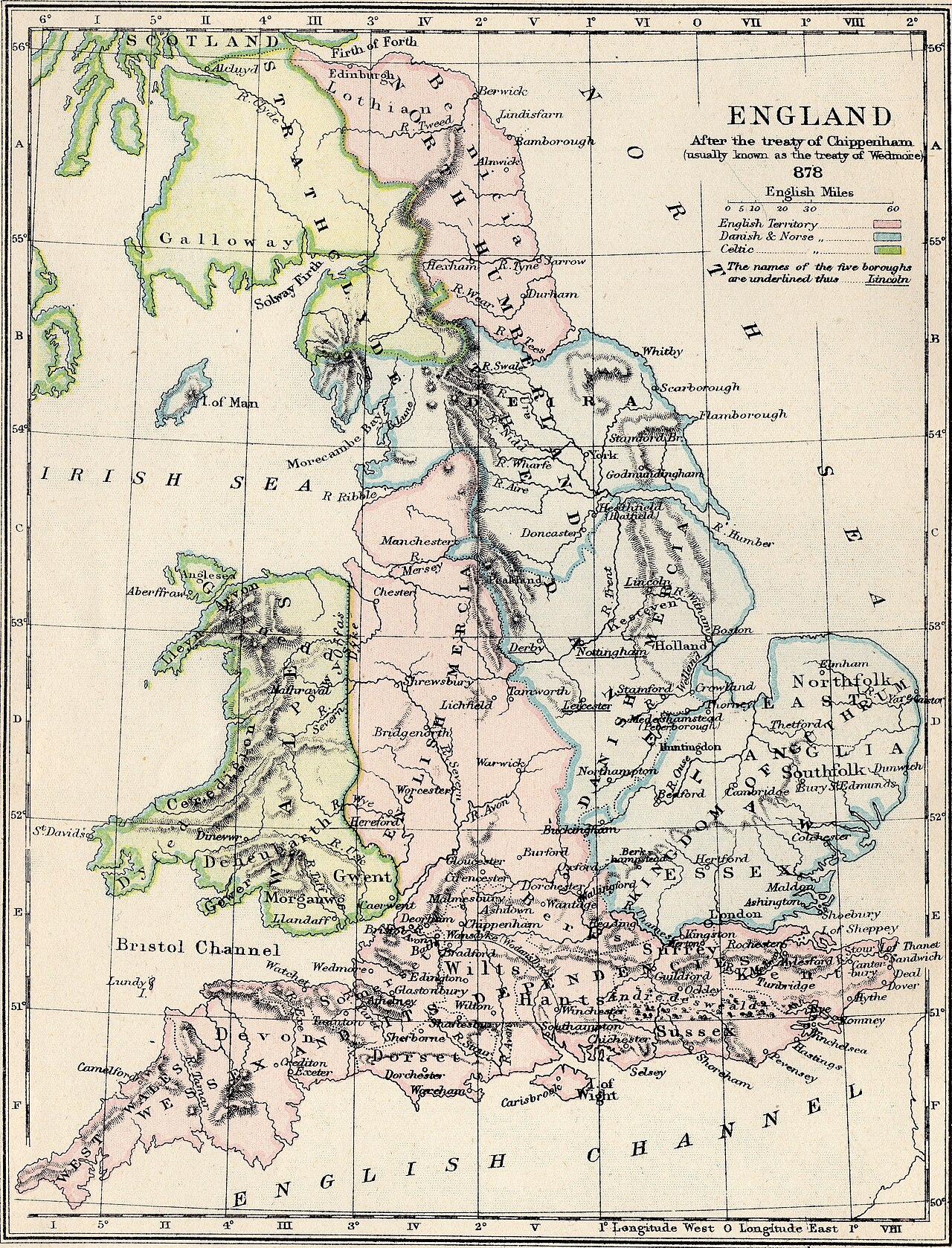
Region of England under Danish law after Viking conquest.

S. R. Gardiner · Public domain
The Danelaw was the part of England between the late ninth century and the Norman Conquest under Anglo-Saxon rule in which Danish laws applied. It originated in the conquest and occupation of large parts of eastern and northern England by Danish Vikings in the late ninth century. The term applies to the areas in which English kings allowed the Danes to keep their own laws following the early tenth-century Anglo-Saxon conquest of Danish-ruled eastern and northern England in return for the Danish settlers' loyalty to the English crown. "Danelaw" is first recorded in the early 11th century as Dena lage.
- Period
- Late 9th century to Norman Conquest (1066)
- First recorded term
- Early 11th century as Dena lage
- Geographic area
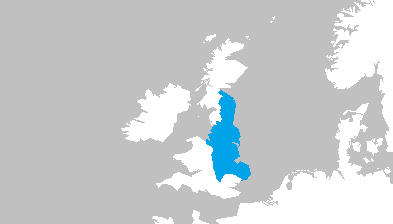
- Yorkshire, central and eastern Midlands, East of England
- Language effect
- Emergence of Anglo-Norse dialects
Lore & Background
With the increase in population and productivity in Scandinavia, Viking warriors, having sought treasure and glory in the nearby British Isles, "proceeded to plough and support themselves," in the words of the Anglo-Saxon Chronicle for 876.
Reader's Guide
The Danelaw represents a significant period of cultural and legal fusion between Anglo-Saxons and Danish Vikings in early medieval England. Its legal framework, established through treaties such as the Treaty of Wedmore and the Treaty of Alfred and Guthrum, allowed Danish settlers to maintain their own laws in exchange for loyalty to the English crown. This arrangement facilitated a relatively stable coexistence and influenced the development of English law, as the Danelaw appeared in legislation as late as the early 12th century with the Leges Henrici Primi, where it is referred to as one of the laws together with those of Wessex and Mercia into which England was divided. The linguistic impact was also notable, with the emergence of Anglo-Norse dialects. The Danelaw's legacy is seen in the place names and legal traditions of eastern and northern England, and it underscores the complex interplay of conquest, settlement, and assimilation that shaped the English nation.
Did You Know?
- The Danelaw is first recorded in the early 11th century as Dena lage.
- The Danelaw approximately covered Yorkshire, the central and eastern Midlands, and the East of England.
- The language spoken in England was affected by this clash of cultures, with the emergence of Anglo-Norse dialects.
Origins: The Great Heathen Army's Conquest
United under leaders including Halfdan Ragnarsson and Ivar the Boneless, sons of the legendary Ragnar Lodbrok, this combined army set its sights on all four Anglo-Saxon kingdoms. Within two years they had seized Northumbria and its capital York, defeating both the deposed King Osberht and the usurper Ælla, then installing a puppet ruler, Ecgberht I. The West Saxon brothers Æthelred and Alfred mounted counterattacks at Reading and Ashdown, but the Danes proved relentless. This decade of conquest laid the geographic and political groundwork for what would later be called the Danelaw.
The Treaty Framework: Law, Loyalty, and Baptism
After Guthrum's Danish army was routed and driven back to Chippenham, King Alfred besieged them until surrender. As a condition of that surrender, Alfred insisted that Guthrum accept Christian baptism, with the West Saxon king himself serving as godfather. In the years between that victory and Guthrum's death in 890, the broader Treaty of Alfred and Guthrum was formalised. It drew clear boundaries between their respective kingdoms and established provisions for peaceful coexistence. Crucially, it permitted the Danish settlers to retain their own legal traditions and self-governance, provided they swore loyalty to the English crown. This arrangement—Danes governing themselves under their own laws while acknowledging English sovereignty—became the defining principle of the Danelaw. The term itself, recorded as Dena lage, does not appear in written sources until the early eleventh century, suggesting the concept evolved gradually before receiving a fixed name.
Cultural Fusion and the Anglo-Norse World
The Danelaw's footprint on English culture extended far beyond legal codes. The region it encompassed—roughly Yorkshire, the central and eastern Midlands, and the East of England—became a zone of intense cultural blending. The Anglo-Saxon Chronicle's entry for 876 captures a pivotal shift: rather than continuing to raid, the Viking warriors proceeded to plough and support themselves, settling into agricultural life. This permanent presence, driven in part by rising population and productivity back in Scandinavia, created a sustained contact zone where two linguistic traditions intertwined, giving rise to Anglo-Norse dialects that shaped the English language for centuries. The Danish capital at York, known to them as Jórvík, became a centre of this hybrid culture. Anglo-Saxon kings gradually reasserted control: Edward the Elder and his sister Æthelflæd, the Lady of the Mercians, launched campaigns through the 910s to reclaim Danish-held territories in the Midlands and East Anglia, though submitting Danish jarls were permitted to retain their lands.
Cnut and the North Sea Empire
Though the original Danelaw era had faded by the mid-tenth century, Danish ambitions toward England never fully dissipated. The most dramatic resurgence came with Cnut the Great, who from 1016 to 1035 ruled a unified English kingdom as one component of his vast North Sea Empire, which also encompassed Denmark, Norway, and portions of Sweden. Because Harthacnut already occupied the Danish throne, his accession briefly reunited the North Sea Empire under a single ruler. However, his reign lasted only two more years, ending in 1042, after which the English monarchy reverted to the West Saxon line. This period of Danish kingship demonstrated that the Danelaw's legacy was not merely a relic of ninth-century conquest but a living thread of political connection between England and Scandinavia that persisted, in various forms, for nearly two centuries after the Great Heathen Army first set foot on English soil.
Common Misconceptions (Editorial)
A common misconception is that the Danelaw was a formal, unified kingdom or territory established by the Danes themselves. In fact, the term refers to areas where Danish laws applied, and it originated only after English kings allowed the Danes to keep their own laws following an Anglo-Saxon conquest. Another misconception is that the Danelaw existed from the moment of Viking conquest in the late ninth century; however, the term "Danelaw" is first recorded in the early 11th century as *Dena lage*, long after the initial settlements.
Why It Matters (Editorial)
The Danelaw endures as a key chapter in English history because it shows how conflict and cultural exchange can reshape a nation’s identity. The blending of Anglo-Saxon and Norse societies not only influenced law and language—leaving permanent marks on English dialects—but also reminds us that borders and legal systems are often the result of negotiated power, not just conquest.
Gallery

Frequently Asked Questions
What is The Danelaw?
The Danelaw designates the swath of eastern and northern England where Danish legal customs remained in force under Anglo-Saxon kingship. The arrangement endured from the late ninth century until the Norman Conquest in 1066.
Which areas of England fall within The Danelaw?
The region covers Yorkshire, the central and eastern Midlands, and the broader East of England.
What lasting legacy did The Danelaw leave on English culture?
The prolonged coexistence of Danish and English-speaking communities in the region gave rise to distinct Anglo-Norse dialects that shaped the linguistic landscape of northern and eastern England.
More in The Viking Age 1-21
Spotted an error? Know more?
This is a living reference — every entry is fact-audited, and reader corrections feed straight into our audit queue. Suggest an edit · See this site's audit record