The Varangian Guard
Elite foreign bodyguards of the Byzantine emperors.

Silar · CC BY-SA 4.0
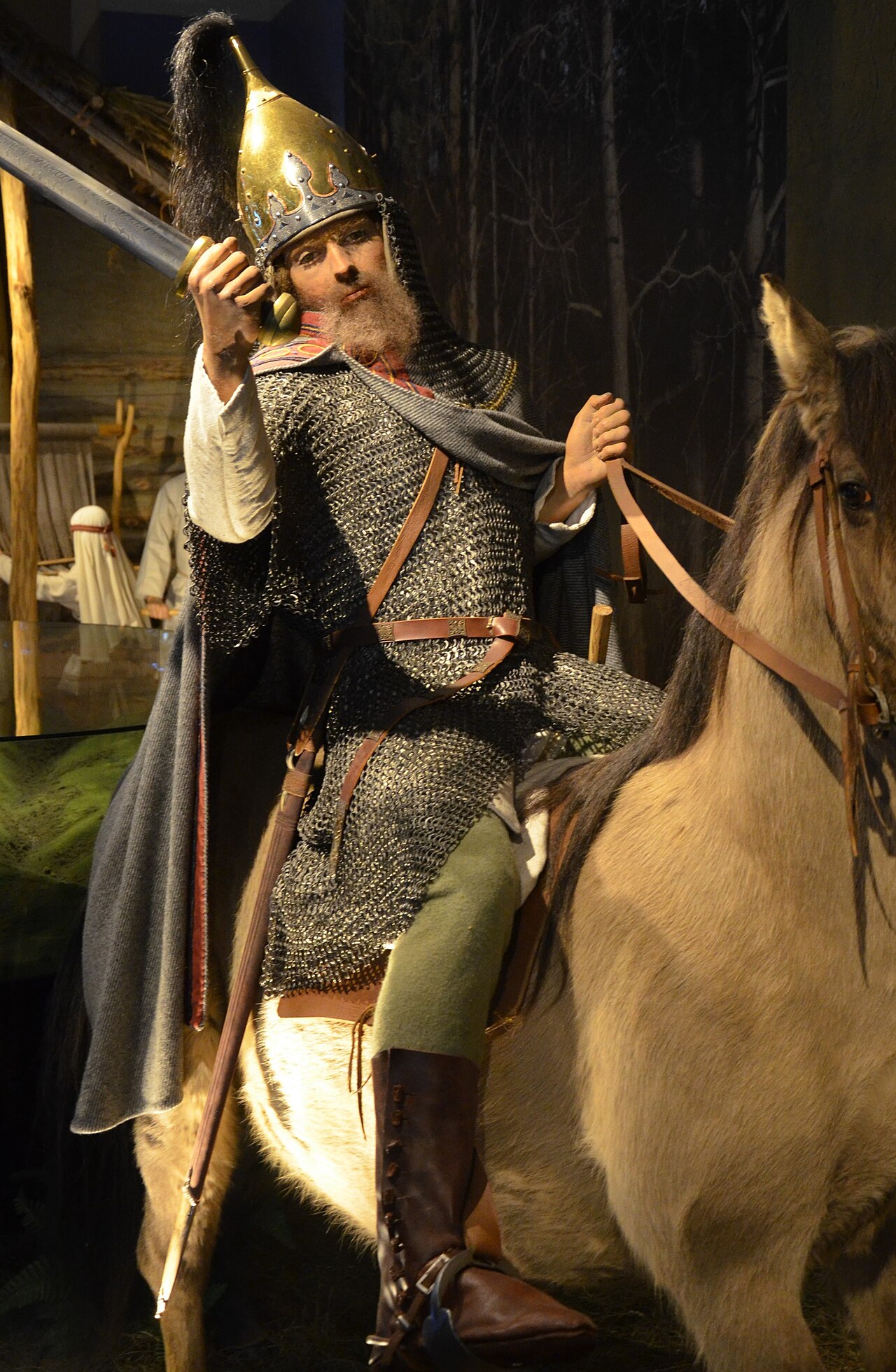
The Varangian Guard (Greek: Τάγμα τῶν Βαράγγων) was an elite unit of the Byzantine army from the 10th to the 14th century, serving as personal bodyguards to the Byzantine emperors. Primarily composed of recruits from Northern Europe—including Norsemen from Scandinavia and later Anglo-Saxons from England—the Guard was deliberately recruited from outside Byzantium to ensure loyalty, as these foreigners lacked local political ties and could be relied upon to suppress revolts by disloyal Byzantine factions.
- Active
- 10th to 14th century
- Origin
- Kievan Rus' (earliest members); later Scandinavia and England
- Role
- Elite personal bodyguards to Byzantine emperors
- Ethnic composition
- Initially Norsemen and Rus'; later largely Anglo-Saxons
Lore & Background
Vladimir sent 6,000 Varangian warriors to Basil as part of a military assistance agreement, and Basil, distrusting native Byzantine guardsmen, employed these foreigners as his personal guards. For the first 100 years, the Guard was almost entirely Norse, with Swedish men enlisting in such numbers that a medieval Swedish law, Västgötalagen, declared no one could inherit while staying in 'Greece' (the Scandinavian term for the Byzantine Empire). After the Norman conquest of England, the Guard began to see increased numbers of Anglo-Saxons. By the late 11th century, under Emperor Alexios Komnenos, the Guard was largely recruited from Anglo-Saxons and others who had suffered at the hands of Vikings and Normans.
Reader's Guide
The Varangian Guard's significance lies in its role as a uniquely loyal and effective military unit within the Byzantine Empire, deliberately recruited from distant lands to ensure political reliability. By employing Norsemen, Rus', and later Anglo-Saxons—who lacked local loyalties—the emperors secured a personal guard that could suppress internal revolts without fear of betrayal. The Guard participated in many wars, often deployed at critical moments, and its presence in southern Italy, Sicily, and the Balkans shaped Byzantine military history. Its legacy extends beyond Byzantium: the emigration of Scandinavians to join the Guard was so substantial that it prompted a Swedish law to curb it. The Guard's composition evolved from Norse to Anglo-Saxon after the Norman conquest of England, reflecting broader European migrations. The Guard thus represents a key example of cross-cultural military service and the strategic use of foreign mercenaries in medieval statecraft.
Did You Know?
- Swedish men enlisted in such numbers that a medieval Swedish law, Västgötalagen, declared no one could inherit while staying in 'Greece' (the Byzantine Empire) to stop the emigration.
- After the Norman conquest of England, the Guard began to see increased numbers of Anglo-Saxons, and by the late 11th century it was largely recruited from them.
Foundations of a Northern State
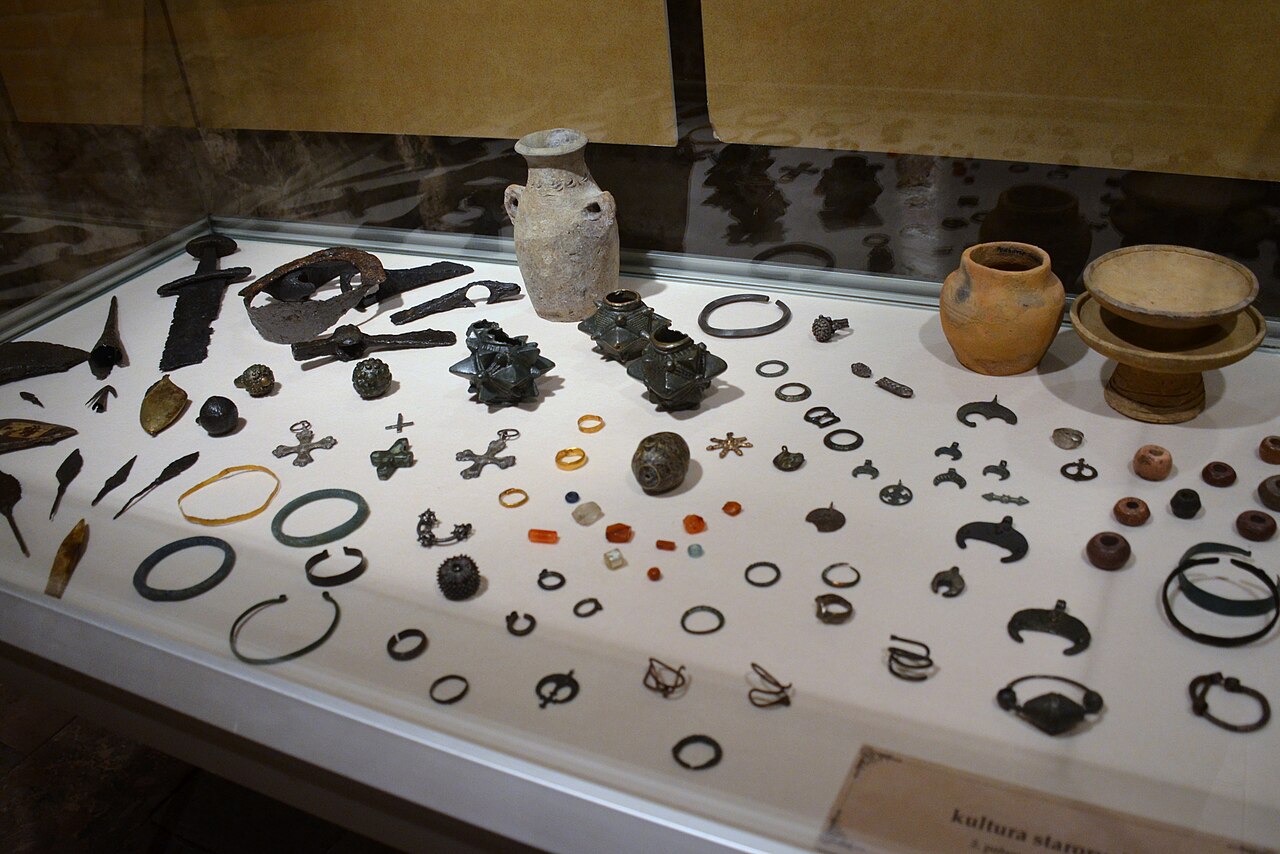
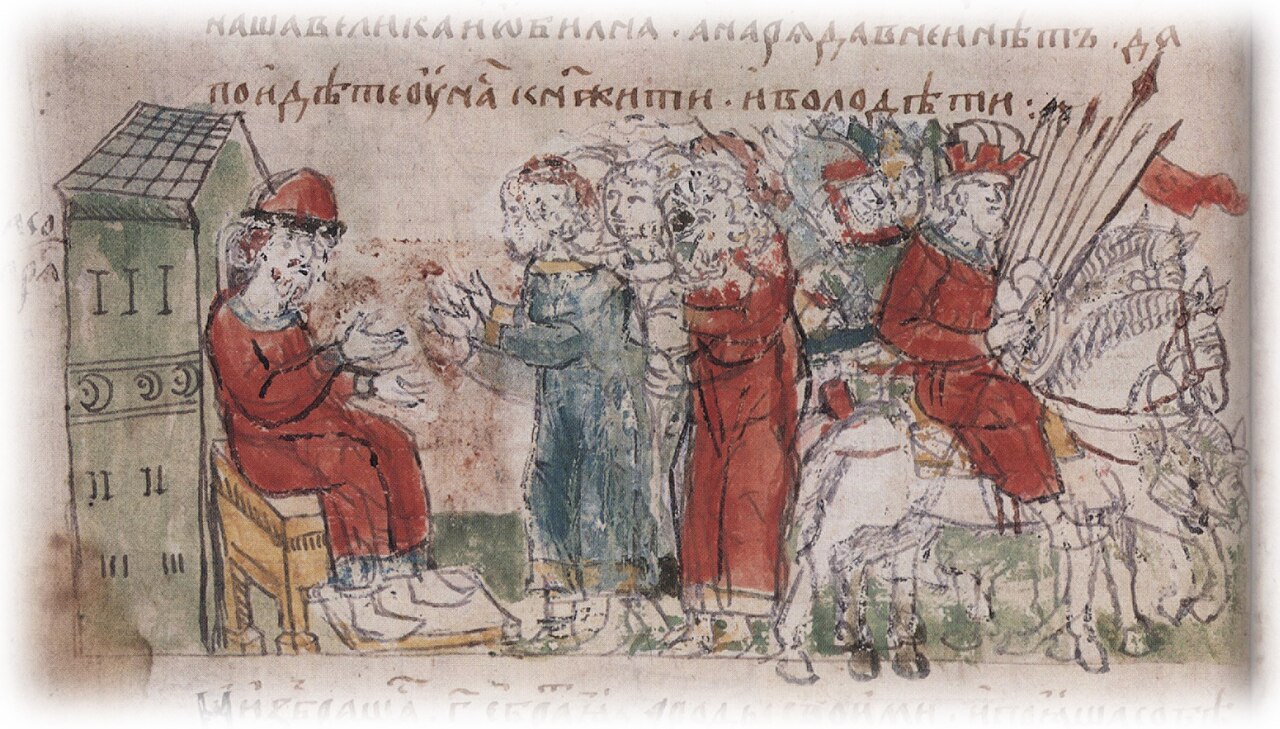
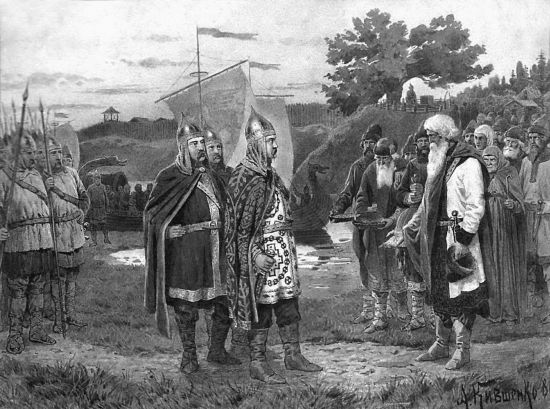
The Varangians were Norse warriors, traders, and settlers—predominantly from what is now Sweden—who migrated into the river valleys of present-day Belarus, Russia, and Ukraine beginning in the eighth and ninth centuries. Their arrival reshaped the political landscape of Eastern Europe. According to the twelfth-century Primary Chronicle, a band of these Norsemen, called the Rus', took up residence in Novgorod in 862 under a leader named Rurik. Some scholars posit that an earlier, more loosely organized polity, the Rus' Khaganate, may have preceded Rurik's settlement. The Varangians also established the principalities of Polotsk and Turov. Norse colonists had been present at Aldeigja, the settlement later known as Ladoga, since the 750s, and they played a formative role in the early ethnogenesis of the Rus' people. By 859, the Primary Chronicle records them exacting tribute from surrounding Slavic and Finnic tribes, marking the moment their presence became a dominant political force in the region.
Masters of the Northern Trade Arteries
The Varangians built their economic power on controlling two vast river corridors that stitched together the medieval world. The Volga route linked the Baltic Sea to the Caspian, carrying goods between Norse traders and the Muslim polities of the Middle East, a region the Norse sagas called Serkland. The Dnieper and Dniester routes ran southward to the Black Sea and thence to Constantinople, connecting the Varangians with the Byzantine Greeks. Together these corridors formed the principal commercial arteries linking Medieval Europe to the Abbasid Caliphate and the Byzantine Empire, and the majority of silver coinage circulating in the West arrived through them. Key trading hubs included Ladoga, Novgorod, Gnyozdovo, and the island of Gotland. The Varangians roamed the river systems and portages of Garðaríki—the Norse name for the lands north of the Black Sea—engaging in commerce, piracy, and mercenary work. By the close of the ninth century the Volga corridor had lost much of its significance, and the Dnieper-Dniester axis rapidly eclipsed it, redirecting the flow of wealth and influence toward the Byzantine world.
Sword-Arm of the Byzantine Throne
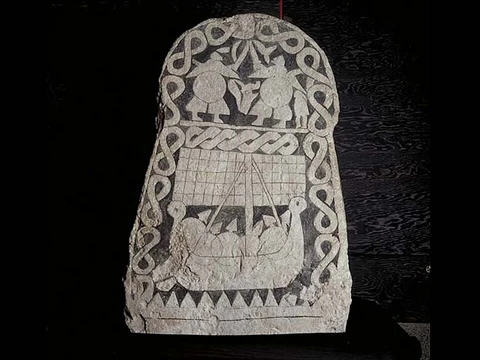
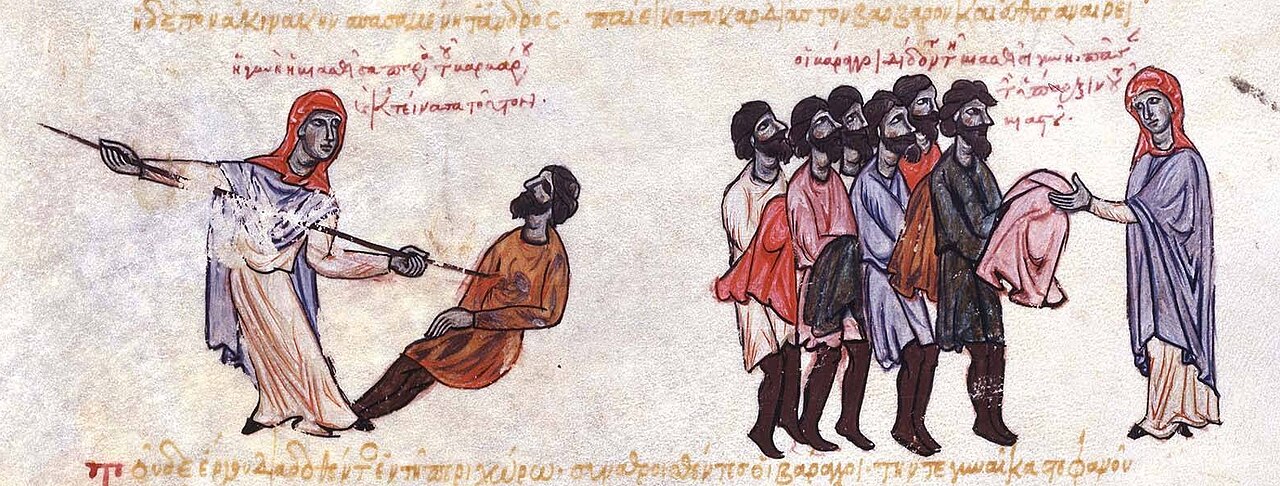
Drawn by the legendary wealth of Constantinople, the Varangian Rus' clashed repeatedly with the Byzantine Empire in a series of conflicts known as the Rus'-Byzantine Wars. Some of these confrontations ended not in destruction but in favorable trade agreements that benefited both sides. From the early tenth century onward, a growing number of Norse warriors chose to serve as professional mercenaries within the Byzantine Army, and many rose to form the elite Varangian Guard—the personal bodyguard corps of the Byzantine emperors. The human cost of this service is etched in stone across Scandinavia. The so-called Greece Runestones, the largest cluster of memorial stones referencing foreign campaigns, were raised by former guardsmen or in their memory. A smaller set, the four Italy Runestones, honors those who fell in southern Italy.
From Norse Pagan to Slavic Christian
The final chapter of the Varangian story is one of gradual transformation and absorption. Over the course of the tenth and eleventh centuries, most of those who had settled in Byzantium and Eastern Europe abandoned their Norse pagan faith and embraced Orthodox Christianity. As the broader Viking Age waned, the steady stream of Scandinavian newcomers to Rus' dried up, and the remaining Varangians slowly merged into Slavic society by the late eleventh century. Linguistic evidence underscores this transition: the very word 'Varangian' in its various forms does not appear in primary sources until the eleventh century, suggesting that the broader label 'Rus'' had been used for all Scandinavians until the term became too tightly bound to the assimilated ruling elite of Kievan Rus'. The Old Norse root væringi, a compound of vár (pledge or faith) and gengi (companion), originally described a foreigner bound to a new lord by a treaty of fealty—a definition that, in time, became a Slavic identity.
Common Misconceptions (Editorial)
Some people assume the Varangian Guard was always composed of Scandinavians, but the facts show that after the Norman conquest of England, it was increasingly recruited from Anglo-Saxons, and by the late 11th century it was largely made up of them. Another misconception is that the Guard was staffed by a mix of ethnicities from the start, whereas the on-record facts state it was almost entirely Norse for the first 100 years.
Why It Matters (Editorial)
The Varangian Guard endures in popular imagination as a symbol of cross-cultural exchange between Northern Europe and the Byzantine world, illustrating how distant societies could shape each other’s military and political power. Its unique recruitment from foreigners with no local loyalties also highlights a timeless tactic for securing a ruler’s safety: relying on outsiders who owe everything to the throne.
Gallery

Frequently Asked Questions
Who is The Varangian Guard?
The Varangian Guard was an elite military unit within the Byzantine army that served as the personal bodyguards of the emperors. Active from the 10th through the 14th century, they were a uniquely foreign force stationed at the heart of the Byzantine court.
What role did The Varangian Guard play?
Their primary duty was protecting the Byzantine emperor and his household, but they also fought in major campaigns across the empire. Because they were drawn from Scandinavia, Kievan Rus', and later England, they had no local political allegiances and could be trusted to crush internal revolts.
Why is The Varangian Guard important to Viking Age history?
They represent the longest-lasting institutional legacy of Norse military service outside Scandinavia, linking Viking warriors directly to the political machinery of the Byzantine Empire. Their existence shows how far-reaching the impact of Norse martial culture extended into the medieval Mediterranean world.
More in The Viking Age 1-21
Spotted an error? Know more?
This is a living reference — every entry is fact-audited, and reader corrections feed straight into our audit queue. Suggest an edit · See this site's audit record