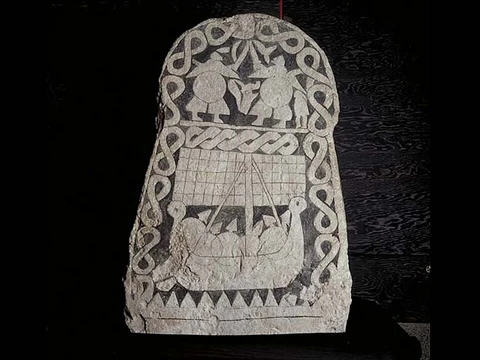
Norse colonization of North America
Norse explorers settled Greenland and briefly reached North America.

Further west, only one confirmed settlement exists: L'Anse aux Meadows in Newfoundland, Canada. The Norse presence on the mainland was short-lived, and no confirmed remains have been found in the present-day United States.
- start_date
- Late 10th century AD
- end_date
- 15th century (Greenland colonies abandoned)
- peak_population
- 2,000–3,000 (Greenland western coast)
- confirmed_settlements
- L'Anse aux Meadows (Newfoundland) and Greenland settlements
- primary_exports
- Walrus ivory, hides, polar bear skins, narwhal tusks
- key_sources
- Vinland sagas (13th–14th century Icelandic sagas)
Lore & Background
Norse Greenland consisted of two main settlements: the Eastern Settlement at the southwestern tip of Greenland and the Western Settlement near present-day Nuuk, with a smaller Middle Settlement. The population peaked at 2,000–3,000, sustained by pastoral farming on scattered coastal fjords and exports of walrus ivory to Europe. For timber and iron, colonists launched expeditions into the Canadian Arctic and likely into the Gulf of St. Lawrence. Wood fragments and butternuts from plants not native to Newfoundland suggest expeditions to the continental mainland. The Vinland sagas, written down in Iceland centuries after the events, describe voyages to lands called Helluland, Markland, and Vinland. These sagas are heroic Icelandic sagas originally shared orally and written during the 13th and 14th centuries, limiting their reliability as historical records. By the mid-20th century, debate over whether these lands corresponded to real places produced a range of scholarly and antiquarian theories, as well as nationalist, pseudoscientific, and pseudohistorical theories. In the 1960s, archaeologists found Norse remains on the northern tip of Newfoundland, confirming a mainland presence. The Greenland colonies declined in the 14th century due to economic hardship, isolation, lower seal populations, climatic cooling of the Little Ice Age, and sea level rise in the fjords. Possible evidence of Norse contact with Indigenous peoples comes from a genetic lineage now carried by some Icelanders, likely introduced by a Native American.
Reader's Guide
The Norse relied on pastoral farming, hunting, and trade with Europe, exporting walrus ivory and other Arctic goods. Their interactions with Indigenous peoples, whom they called Skrælingjar, are evidenced by traded items found beyond Norse areas and a genetic lineage in some Icelanders. The Vinland sagas, though written centuries later, provide the primary literary accounts of these voyages, but their reliability is limited by their medieval heroic conventions. The eventual abandonment of the Greenland colonies in the 15th century was driven by a combination of economic, environmental, and climatic factors, including the Little Ice Age. The legacy of Norse exploration continues to generate scholarly and popular interest, with ongoing debates about the extent of their travels and contacts.
Did You Know?
- L'Anse aux Meadows in Newfoundland is the only confirmed Norse settlement in Canada.
- The Norse exported walrus ivory to Europe, but competition from African elephant ivory contributed to economic decline.
- A genetic lineage in some Icelanders likely originated from a Native American woman, suggesting contact.
- The Vinland sagas were first written down in Iceland during the 13th and 14th centuries, long after the events.
Common Misconceptions (Editorial)
Some believe the Norse established multiple settlements across North America, but the only confirmed Norse site in Canada is L’Anse aux Meadows, and no confirmed remains have been found in the present-day United States. Another misconception is that the Vinland sagas are reliable historical records; in fact, they were written centuries after the events and are heroic Icelandic sagas, limiting their accuracy.
Why It Matters (Editorial)
The Norse colonization of North America endures as a testament to the limits of premodern transatlantic exploration and the fragility of isolated colonies. It also highlights how oral tradition and later written sagas can blur the line between history and legend, reminding us that even well-known stories require careful archaeological and genetic evidence to be confirmed.
Frequently Asked Questions
Where exactly did the Norse settle in North America?
The only confirmed mainland site is L'Anse aux Meadows on the coast of Newfoundland, Canada. No verified Norse remains have ever been located in the present-day United States or any other part of the continent.
How long did the Norse stay in North America?
The mainland foray was extremely brief, likely lasting only a handful of seasons around the late 10th century. By comparison, the Greenland colonies persisted for roughly five hundred years before being fully abandoned in the 15th century.
What sources tell us about Norse North America?
Our main written accounts are the Vinland sagas, Icelandic texts composed in the 13th and 14th centuries that narrate Leif Erikson's voyage westward. Archaeological excavation at L'Anse aux Meadows later supplied the physical corroboration those sagas had long claimed.
What goods did the Norse export from their far-north colonies?
Traders shipped walrus ivory, animal hides, polar bear skins, and narwhal tusks back to Iceland and Norway. These exotic luxury materials made the Greenland and Vinland ventures economically viable despite the severe climate.
Why did the Norse abandon their North American and Greenland settlements?
The short-lived mainland camp was most likely dropped after conflicts with Indigenous peoples and the sheer difficulty of maintaining a small group so far from any supply base. The Greenland colonies, meanwhile, slowly declined over centuries as cooling temperatures, disrupted trade routes, and internal social pressures made continued habitation untenable.
More in The Viking Age 1-21
Spotted an error? Know more?
This is a living reference — every entry is fact-audited, and reader corrections feed straight into our audit queue. Suggest an edit · See this site's audit record